Host Cities: How Nijmegen Shaped European Multi-Sport History
Hosting a major multi-sport event is one of the most complex logistical undertakings a European city can attempt. From venue planning to volunteer recruitment, from transport logistics to legacy management, the demands are substantial – and the rewards, when the event succeeds, are real and measurable.
What Hosting Actually Involves
When a city commits to hosting a multi-sport event, it is committing to a multi-year project that touches virtually every aspect of municipal life. Venue selection and upgrade, transport planning, accommodation brokering, volunteer recruitment and training, media management, participant services – each of these workstreams requires dedicated resource, careful coordination, and contingency planning for the inevitable problems.
For EuroGames-scale events, the organisational burden is distributed between a purpose-built local organising committee and the event’s international governing body. The governing body provides the brand, the competition standards, and the accumulated knowledge of previous editions. The local committee provides the city knowledge, the political relationships, and the operational infrastructure. The relationship between these two entities – how well they communicate and how clearly responsibilities are divided – is often the most important single factor determining whether an event succeeds.
The Nijmegen Model
EuroGames 2022 in Nijmegen offers a useful case study in successful host city management. The city’s organising committee made several decisions early in the planning process that proved to be well-judged.
First, they committed to using existing venues rather than building new infrastructure wherever possible. The GelreDome, the university sports centre, and the network of community sports halls across the city all had known capacity and known operational characteristics. This reduced financial risk and simplified logistics at the cost of some inflexibility in programming. It also had a legacy benefit: no white-elephant facilities to maintain after the event.
Second, they invested heavily in volunteer recruitment and training. EuroGames 2022 mobilised over 3,000 volunteers – a number that required a dedicated volunteer management operation and a training programme that ran for months before the event. The quality of the volunteer experience was widely cited by participants as a highlight of the event overall.
Venue Distribution and City Identity
One of the distinctive features of community multi-sport events compared to elite championships is the opportunity to distribute venues across a city rather than concentrating them in an Olympic park. This distribution creates a different kind of urban experience: competitors move through the city’s normal geography rather than being channelled into a purpose-built zone.
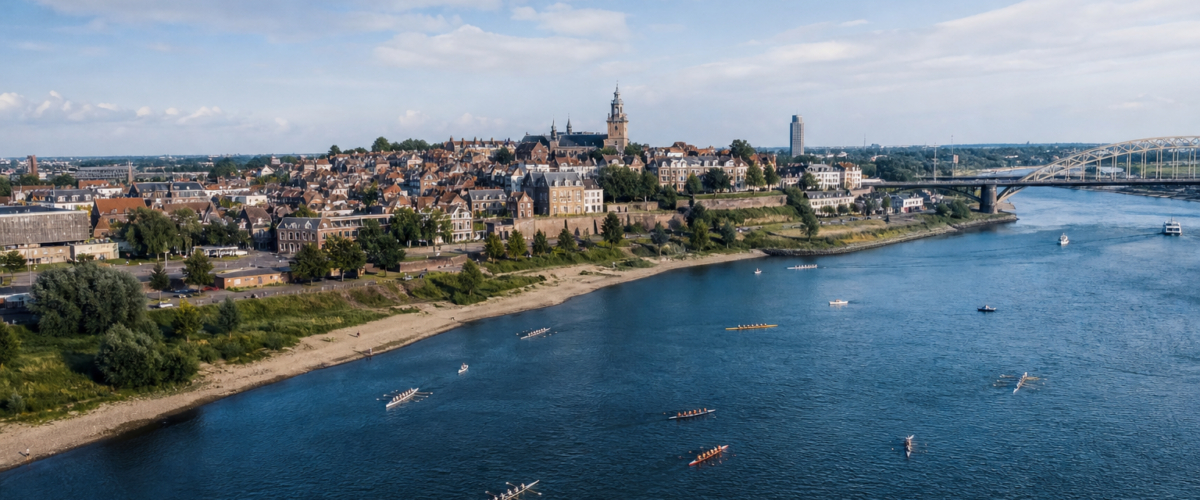
In Nijmegen, the rowing events on the Waal were conducted in view of the historic city centre, cycling routes passed through the landscapes that define the region, and team sport venues were located in community facilities where most participants train regularly. The event felt embedded in the city rather than imposed upon it – which is one of the qualities that makes community multi-sport events different from their elite counterparts.
Economic Impact
Post-event economic impact assessments for EuroGames 2022 indicated that the event generated significant direct and indirect economic activity for Nijmegen and the Gelderland region. Hotel occupancy during the event period was close to 100% across the region, restaurant and bar revenues increased substantially, and transport infrastructure handled volumes significantly above normal capacity.
The multiplier effect of a large multi-sport event extends beyond the event period itself. Competitors who visit a city for the first time and have a positive experience frequently return as ordinary tourists. Media coverage generates awareness that translates into future visitor interest. The upgrades to sports facilities benefit local athletes and clubs for years after the competition.
Challenges and How Nijmegen Managed Them
No event of this scale is without problems. Nijmegen’s challenges included transport bottlenecks during peak event periods, scheduling conflicts between disciplines sharing venues, and the logistical complexity of managing competitors and spectators across a geographically dispersed programme.
The transport issues were managed through a combination of temporary bus services, cycling infrastructure improvements, and clear communication to participants about journey times between venues. The scheduling conflicts were resolved through a detailed cross-discipline grid analysis that identified potential clashes months before the event. The geographical complexity was addressed through a comprehensive wayfinding system and a mobile app that provided real-time information to participants.
The European Olympic Committees’ governance discussions illustrate the kinds of programme decisions that all multi-sport event hosts must navigate – decisions that have downstream effects on venue requirements, scheduling, and budget.
The Legacy Question
Legacy planning – deciding in advance what you want the event to have produced five or ten years hence – is now considered essential practice for any major multi-sport event host. Physical legacy (infrastructure), human legacy (trained officials, expanded clubs), and social legacy (attitudes, norms, community relationships) all require deliberate attention.
Nijmegen’s legacy strategy focused particularly on the human and social dimensions: building the capacity of local LGBTQ+ sports organisations, strengthening the connections between those organisations and mainstream club sport, and using the visibility of the event to normalise inclusive sporting participation. The physical infrastructure improvements were real but secondary to this broader social ambition.
For an overview of how Nijmegen’s sporting geography shaped the event’s execution, or to explore the disciplines that defined the competition programme, see the related sections of this site.